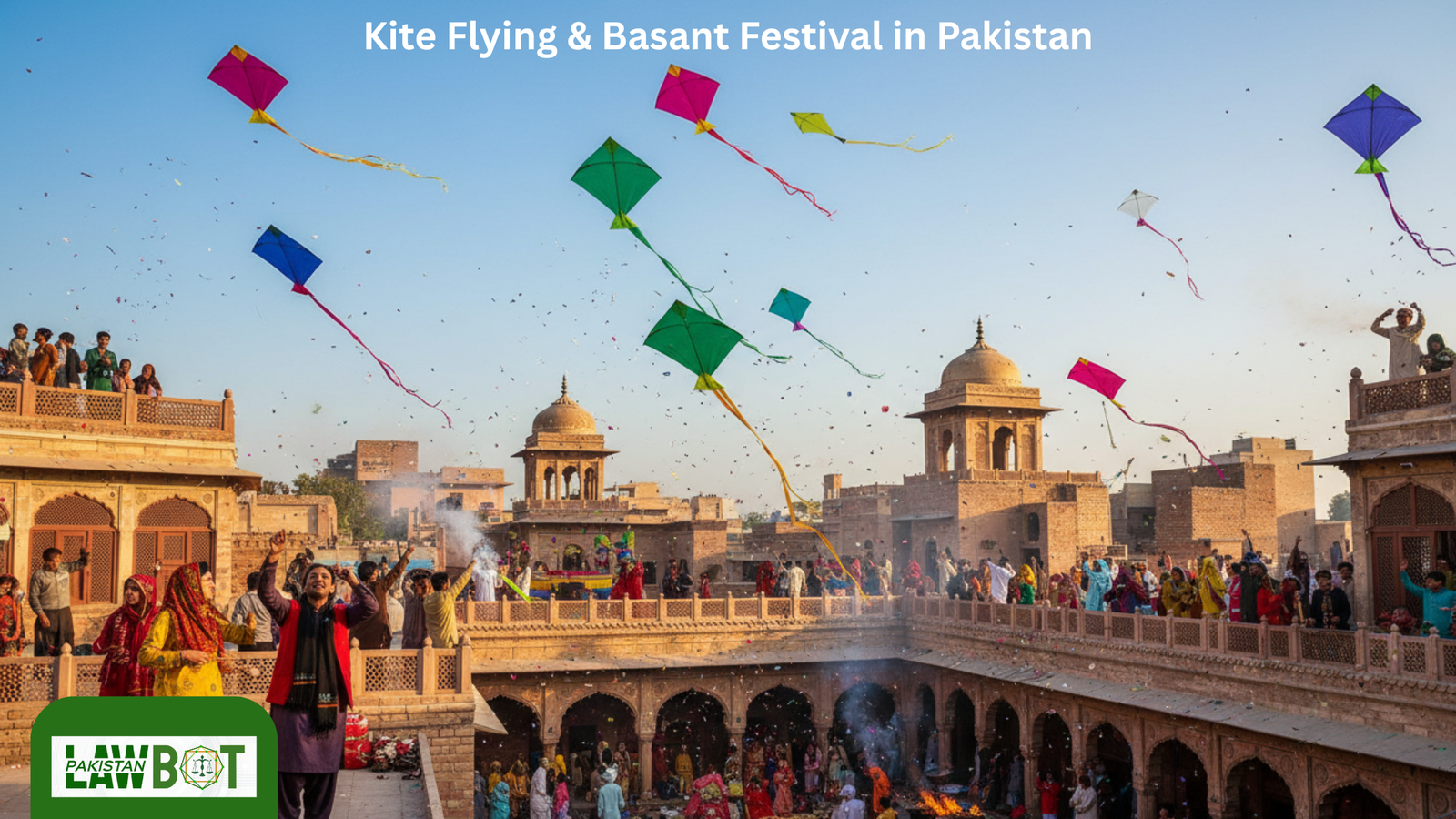
The Basant kite festival in Pakistan is one of the most colorful and emotionally rooted cultural celebrations in South Asia. It marks the arrival of spring and symbolizes joy, renewal, and unity. For generations, people across Punjab—especially in Lahore, Kasur, and Gujranwala—have celebrated Basant through kite flying, music, food, and social gatherings on rooftops.
Over time, Basant has evolved. While it remains a celebration of culture, it is now also associated with safety awareness and legal responsibility. Today, kite flying in Pakistan is discussed not only as entertainment but also as a regulated cultural activity that must balance tradition with public safety.
Historical Background of Basant
Basant has ancient roots that trace back hundreds of years. Historically, it was celebrated to welcome spring after long winters. Farmers, traders, and families marked this seasonal change with festivals, yellow attire, and outdoor gatherings.
In Punjab, flying kites gradually became the heart of the celebration. What started as a symbolic activity turned into an exciting social tradition. Over the decades, the kite Basant game gained popularity, transforming rooftops into lively spaces filled with competition, laughter, and celebration.
Kite Flying Culture in Punjab
The kite flying culture in Punjab is unique and deeply social. Unlike casual kite flying, Basant involves skill, timing, and teamwork. Participants carefully select kite sizes, shapes, and strings to compete effectively.
Moreover, Basant strengthens community bonds. Neighbors gather on rooftops, families invite guests, and children learn traditions from elders. Therefore, flying kites in Pakistan has always been more than a game—it is a shared cultural experience.
Basant Festival in Pakistan: Rise, Ban, and Impact
For many years, the Basant festival in Pakistan attracted tourists and supported local economies. Kite makers, paper vendors, food sellers, and musicians benefited from the festival season.
However, the misuse of dangerous kite strings caused serious injuries and fatalities. As a result, authorities imposed a ban on kite flying in Punjab in the early 2000s. While the ban saved lives, it also paused a major cultural tradition and affected thousands of livelihoods.
Legal Framework and Revival of Basant
In recent years, cultural discussions and public demand led to a regulated revival of Basant. The Punjab government introduced strict laws to control kite manufacturing, selling, and flying.
Under the Punjab Kite Flying Ordinance 2025, only approved materials are allowed, and violations carry heavy penalties. These laws aim to ensure that kite flying in Pakistan can continue safely.
For official legal references, readers may visit the Punjab Government Law Portal: https://punjab.gov.pk/
Safety Rules Under Punjab Kite Flying Ordinance 2025
To ensure public safety and responsible celebration of the Basant kite festival in Pakistan, the government has defined clear material standards and legal boundaries.
Approved Materials (Schedule-I)
Only approved kite materials and strings are permitted.
Patang (Kite Specifications)
- Maximum size: 35 inches width × 30 inches length (4.5 Githi)
Gudda (Kite Specifications)
- Maximum size: 40 inches width × 34 inches length (1.5 Tawa)
Kite String (Dor) Requirements
- 100% cotton material
- Maximum 9 threads (tars)
- Minimum 28 count strength
- Coated only with approved maanjha
- Stored in a round ball shape (Pinna) with QR code
Strictly Prohibited Materials
- Glass- or metal-coated strings
- Chemical-coated dor
- Charkhi (spool)
- Any non-approved kite material
Violations may result in heavy fines and imprisonment under Punjab law.
Patang Kite and Traditional Craftsmanship
The patang kite is a symbol of Punjabi craftsmanship. Skilled artisans cut paper, shape bamboo frames, and balance weight for smooth flight.
With regulated Basant celebrations, demand for handmade kites has returned. As a result, local craftsmen once again find income opportunities, helping preserve this traditional art.
Kite Basant Game: Skill, Strategy, and Competition
The kite Basant game requires sharp focus and coordination. Players control wind direction, string tension, and kite balance. Quick reactions often determine victory.
Additionally, teamwork plays a major role. Friends and family assist each other from rooftops, making Basant both competitive and collaborative.
Social and Economic Impact of Basant
Basant strengthens social harmony. Families gather, rooftops open to guests, and communities celebrate together.
Economically, the Basant kite festival in Pakistan supports small businesses, including kite sellers, paper suppliers, food vendors, and event organizers. Therefore, the festival plays a vital role beyond entertainment.
Challenges and Responsible Celebration
Despite improvements, challenges remain. Urban congestion and population density require careful planning.
Responsible celebration includes following laws, supervising children, and avoiding dangerous materials. When communities cooperate, kite flying in Pakistan can remain safe and enjoyable.
Conclusion
The Kite Flying & Basant Festival in Pakistan represents joy, heritage, and unity. Through regulation, awareness, and community responsibility, this cultural celebration is finding its place in modern society. By respecting safety rules and traditions, Basant can continue to color Pakistan’s skies for generations to come.
For historical context, visit: https://en.wikipedia.org/wiki/Basant_(festival)
Frequently Asked Questions (FAQs)
What is the Basant kite festival in Pakistan?
The Basant kite festival in Pakistan is a traditional spring celebration marked by kite flying, music, food, and cultural gatherings, especially in Punjab.
Is kite flying legal in Pakistan?
Kite flying is legal only under regulated conditions. Punjab follows the Kite Flying Ordinance 2025, which allows kite flying with approved materials.
Why was Basant banned in Pakistan?
Basant was banned due to accidents caused by dangerous kite strings. The ban aimed to protect public safety.
What materials are allowed for kite flying?
Only cotton strings and approved kites listed under Schedule-I of the ordinance are allowed. Glass or metal-coated strings are illegal.
What is a patang kite?
A patang kite is a traditional diamond-shaped kite used during Basant and other kite flying events in Pakistan.
How can Basant be celebrated safely?
By following government rules, using approved materials, supervising children, and avoiding dangerous strings, Basant can be enjoyed safely.