
Can You Legally Protest in Pakistan? Section 144 Explained
Can you legally protest in Pakistan? Learn how Article 16 of the Constitution protects peaceful assembly, how Section 144 works, when it can be imposed, how to check if it is active in your city, and when such restrictions may be challenged before the courts.
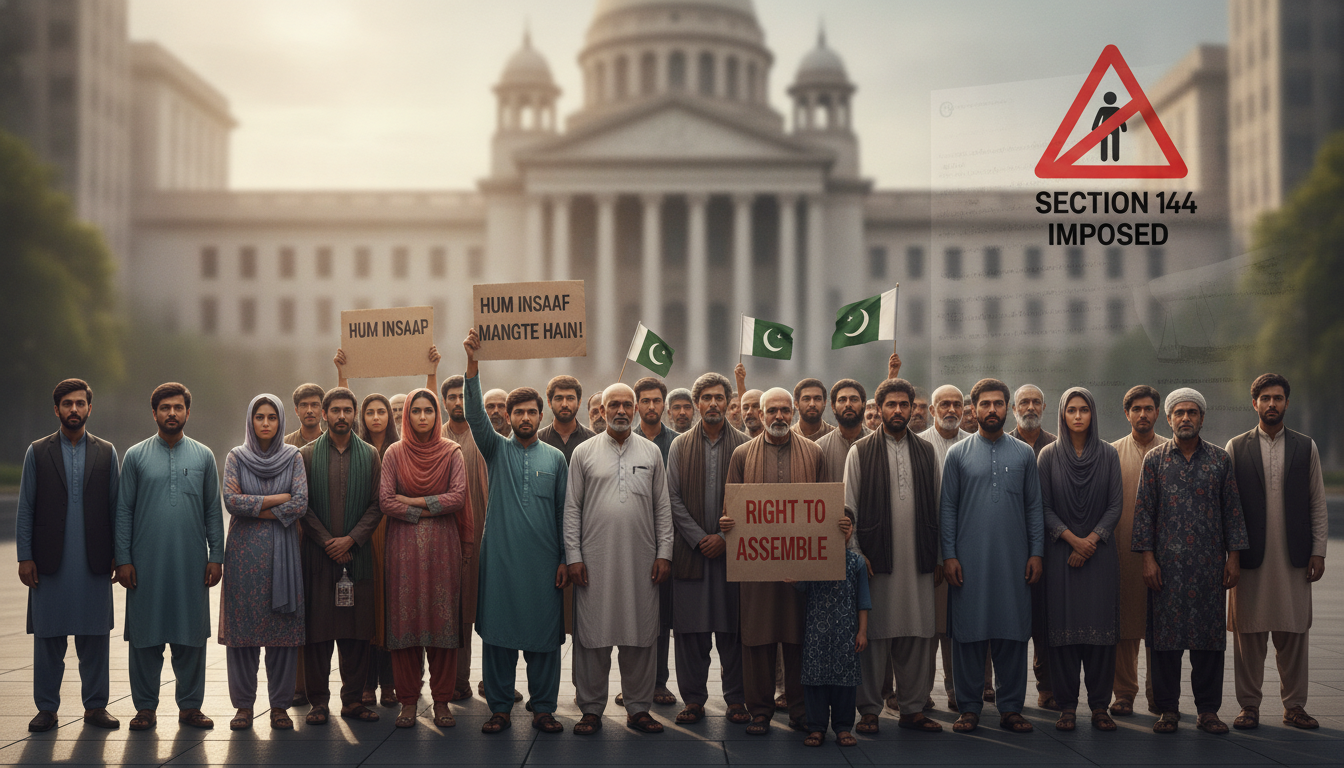
The Constitution of Pakistan guarantees every citizen the right to assemble peacefully under Article 16. However, this right is not absolute. Authorities may temporarily impose restrictions under Section 144 of the Code of Criminal Procedure (CrPC) to protect public order and safety.
- Courts may review and strike down unlawful or disproportionate restrictions.
- Citizens can verify active Section 144 notifications through official government channels.
- Section 144 is meant to be preventive, not permanent.
- Section 144 allows temporary restrictions in urgent situations.
- Article 16 protects the right to peaceful assembly.
Can You Legally Protest in Pakistan?
Yes.
Peaceful protest is a constitutional right in Pakistan.
However, that right is subject to reasonable legal restrictions designed to protect public order, public safety, and national security. This balance between individual freedoms and public order is at the center of many legal debates in Pakistan.
Whenever political rallies, religious gatherings, or public demonstrations are planned, people often hear that "Section 144 has been imposed."
But what does that actually mean?
Does Section 144 completely remove your constitutional right to protest?
Can authorities impose it indefinitely?
Can such an order be challenged?
This guide explains the law in simple language.
Article 16: Your Constitutional Right to Peaceful Assembly
Article 16 of the Constitution of Pakistan guarantees every citizen the right to assemble peacefully and without arms.
This means citizens generally have the constitutional freedom to:
Hold peaceful demonstrations
Organize public meetings
Participate in rallies
Express collective opinions
Protest government policies peacefully
However, Article 16 also allows the State to impose reasonable restrictions in the interest of public order through law. Therefore, the right to protest is protected but is not unlimited.
What Is Section 144?
Section 144 of the Code of Criminal Procedure (CrPC), 1898, empowers a District Magistrate or other authorized Executive Magistrate to issue temporary orders in urgent situations where there is an apprehended danger to public peace, safety, or order.
The purpose of Section 144 is preventive rather than punitive.
Authorities commonly use it to prohibit:
Public gatherings
Political rallies
Sit-ins
Demonstrations
Carrying weapons
Certain activities that may threaten public safety
Each notification specifies:
The affected area
The restricted activities
The duration of the order
The legal authority issuing it
Why Is Section 144 Imposed?
District administrations generally invoke Section 144 when they believe there is an immediate risk to:
Public safety
Law and order
Human life
Public property
Religious harmony
National security
Examples include:
Political unrest
Election periods
Religious processions
Security threats
Public health emergencies
Major examinations
Terrorism threats
The purpose is to prevent violence before it occurs rather than respond after damage has been done.
Is Section 144 Permanent?
No.
By law, Section 144 is intended to be a temporary emergency measure.
It should only remain in force for the period necessary to address the specific risk identified by the authorities.
Why Do People Say Section 144 Lasts for Months?
One of the most common criticisms is that authorities sometimes issue consecutive notifications, effectively extending restrictions for long periods.
Instead of a single continuous order, a new notification may be issued shortly before the previous one expires.
Critics argue that repeated renewals can have the practical effect of restricting public assembly for extended periods, raising questions about proportionality and constitutional rights.
HRCP's Concerns About Section 144
The Human Rights Commission of Pakistan (HRCP) has repeatedly expressed concern over the frequent and broad use of Section 144.
According to HRCP, the provision should remain an exceptional emergency measure rather than become a routine administrative tool for restricting peaceful assembly.
Human rights advocates have argued that overuse may discourage citizens from exercising their constitutional freedoms and can undermine democratic participation.
Does Section 144 Mean Every Protest Is Illegal?
Not necessarily.
A protest becomes unlawful if it violates a valid and enforceable restriction issued under Section 144 or other applicable laws.
Whether a protest is lawful depends on several factors, including:
Whether Section 144 is actually in force
The exact wording of the notification
The location covered by the order
The activities prohibited
Whether participants comply with applicable legal requirements
Each situation must be assessed based on the specific notification and surrounding circumstances.
How Can You Check Whether Section 144 Is Active in Your City?
Before attending or organizing a public gathering, you should verify whether a Section 144 notification has been issued.
Reliable sources include:
Official Deputy Commissioner (DC) office announcements
Provincial Home Department notifications
Official government websites
Verified social media accounts of district administrations
Official press releases
Avoid relying solely on social media posts or forwarded messages.
Can Section 144 Be Challenged?
Yes.
Section 144 orders are not beyond judicial review.
Where a citizen believes that an order:
exceeds legal authority,
is unreasonable,
lacks sufficient justification,
is disproportionate, or
unnecessarily restricts constitutional rights,
they may seek legal remedies before the appropriate court.
Pakistani courts have recognized that while governments possess powers to maintain public order, those powers remain subject to constitutional scrutiny and the rule of law.
Balancing Public Order and Fundamental Rights
Courts generally attempt to balance two competing interests:
Constitutional Rights
Freedom of assembly
Freedom of expression
Democratic participation
Public Interest
Public safety
National security
Prevention of violence
Protection of life and property
Neither interest automatically overrides the other.
Instead, authorities are expected to ensure that any restriction is lawful, necessary, and proportionate to the circumstances.
Common Myths About Section 144
Myth 1: Protesting Is Always Illegal
False.
Peaceful protest is constitutionally protected unless lawfully restricted.
Myth 2: Section 144 Can Stay Forever
False.
It is intended to operate as a temporary emergency measure, although successive notifications have drawn criticism.
Myth 3: Authorities Never Have to Explain Their Decision
False.
Orders should identify the legal authority and the public-order concerns justifying the restriction.
Myth 4: Courts Cannot Review Section 144
False.
Courts may examine whether a restriction complies with constitutional and legal requirements.
Practical Tips Before Joining a Protest
Before participating in any public gathering:
Confirm whether Section 144 is active.
Read the official notification carefully.
Follow lawful directions issued by authorities.
Avoid carrying prohibited items.
Stay informed through official government sources.
Seek legal advice if you believe your rights have been unlawfully restricted.
Final Thoughts
The right to peaceful protest is one of the cornerstones of a democratic society and is protected under Article 16 of Pakistan's Constitution. At the same time, the law recognizes that governments may need temporary powers to address genuine threats to public safety.
Understanding how Section 144 works helps citizens distinguish between lawful restrictions and misconceptions. Before attending any public demonstration, always verify whether a valid notification is in force, understand its scope, and remain aware of your legal rights and responsibilities.
Frequently asked questions
Is protesting legal in Pakistan?
Yes. Article 16 of the Constitution guarantees the right to peaceful assembly, subject to reasonable legal restrictions.
What is Section 144?
Section 144 allows authorized magistrates to issue temporary orders restricting certain activities in urgent situations to maintain public order.
Can Section 144 ban all public gatherings?
It may temporarily prohibit specified gatherings within a defined area if the legal conditions for issuing the order are met.
How do I know if Section 144 is active?
Check official notifications from the Deputy Commissioner's Office, Provincial Home Department, or other official government channels.
Does Article 16 guarantee an unrestricted right to protest?
No. Article 16 protects peaceful assembly but expressly permits reasonable restrictions in the interest of public order.
Can I challenge a Section 144 order?
Yes. Courts can review whether such an order is lawful, reasonable, and consistent with constitutional protections.
Need legal help?
Ask our AI assistant or connect with a verified Pakistani lawyer.
Get free legal helpStay ahead with legal insights.
Weekly digest: judgments worth reading, statute amendments, and one product update. No spam.