
Child Labour Laws in Pakistan: Legal Framework, Challenges, and Enforcement
Child labour continues to be a serious social and legal issue in Pakistan. It affects children’s education, health, and future opportunities, while also hindering economic growth and social progress. Over the years, Pakistan has introduced multiple laws and policies aimed at eliminating child labour and protecting children from exploitation. This article provides a detailed overview […]
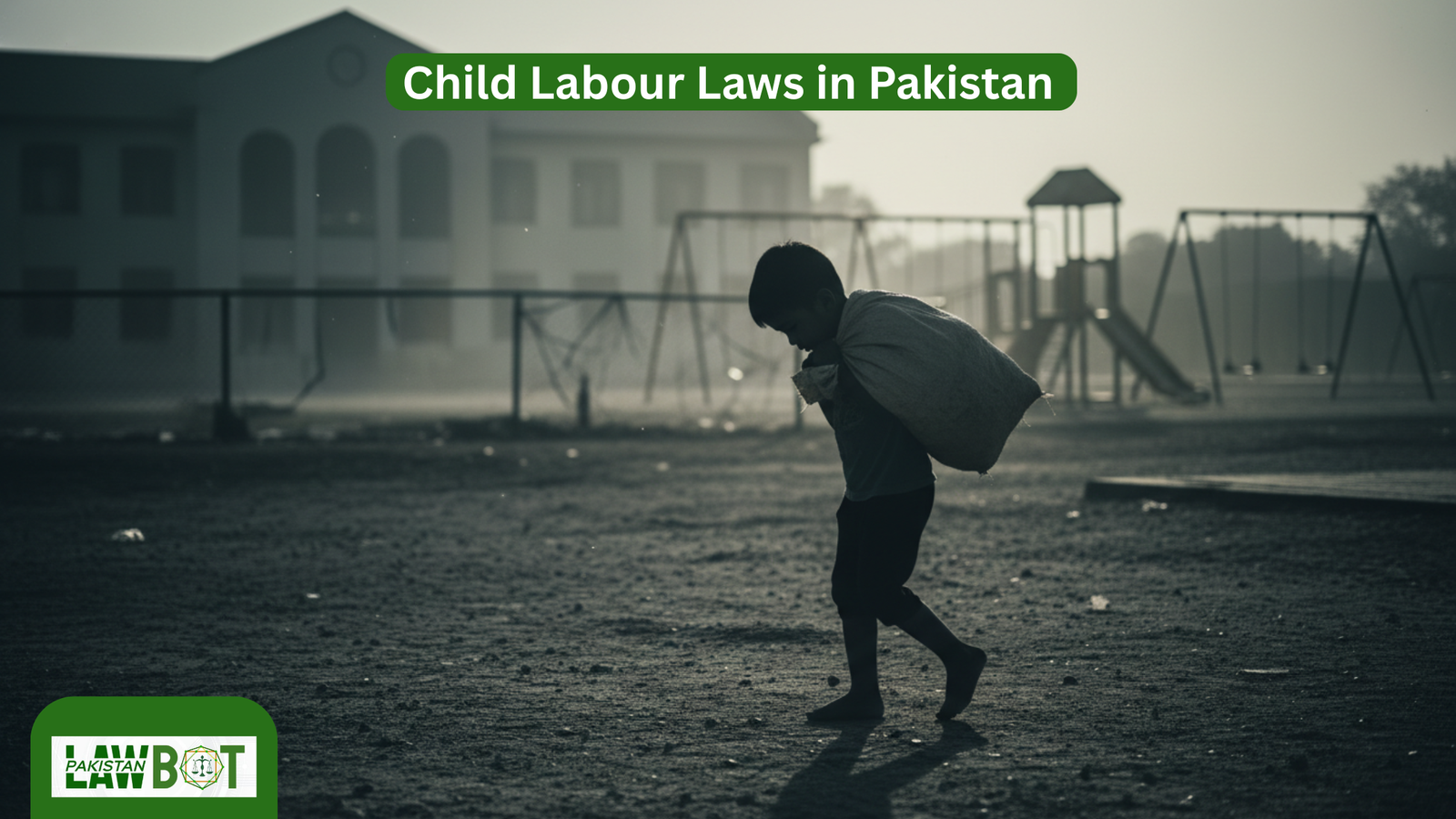
Child labour continues to be a serious social and legal issue in Pakistan. It affects children’s education, health, and future opportunities, while also hindering economic growth and social progress. Over the years, Pakistan has introduced multiple laws and policies aimed at eliminating child labour and protecting children from exploitation.
This article provides a detailed overview of child labour laws in Pakistan, including legal definitions, provincial regulations, enforcement challenges, penalties, and future reforms.
What Is Child Labour?
Child labour is defined as work that negatively impacts a child’s physical, mental, emotional, or educational development. Not all work performed by children is illegal. For example, assisting parents at home or participating in safe part-time work can be acceptable.
However, employment in hazardous environments, forced labour, or work that prevents children from attending school is strictly prohibited. Addressing child labour is essential for the protection of children’s rights and the overall development of society.
Constitutional Protection Against Child Labour
Pakistan’s Constitution provides strong safeguards for children, which form the foundation of all labour laws.
Article 11 – Prohibition of Child Labour
According to Article 11, no child under the age of 14 is permitted to work in factories, mines, or hazardous jobs. This article sets the minimum legal age for employment in high-risk sectors.
Article 25-A – Right to Education
This article guarantees free and compulsory education for children aged 5–16 years. Consequently, education acts as a critical tool to prevent child labour.
Article 37(e) – Humane Working Conditions
The Constitution obliges the state to ensure safe and humane working environments. It also prohibits employment that is unsuitable for children.
Together, these constitutional provisions create a robust legal base for protecting children from exploitation.
Major Child Labour Laws in Pakistan
Pakistan has introduced several federal and provincial laws to regulate child employment. Following the 18th Amendment, labour became a provincial subject, so both federal and provincial authorities are responsible for enforcement.
Employment of Children Act 1991
The Employment of Children Act is the primary federal law governing child labour.
Key Provisions
First, the law prohibits children under 14 from working in hazardous industries. Additionally, it regulates working hours and mandates rest breaks. Employers are also required to maintain proper employment records.
Hazardous Industries List
Children cannot be employed in industries such as:
- Carpet weaving
- Mining and quarrying
- Fireworks production
- Cement manufacturing
- Chemical processing
Since these sectors pose severe risks, violations are subject to strict penalties.
Bonded Labour System (Abolition) Act 1992
Bonded labour has historically exploited children, especially in brick kilns and agriculture. Therefore, this law plays a crucial role in child protection.
Key Highlights
- Declares bonded labour illegal
- Cancels debts that trap families
- Provides rehabilitation support
As a result, families trapped in debt cycles can access legal protection and assistance.
Pakistan Penal Code and Child Protection
Beyond labour-specific laws, criminal provisions protect children from exploitation. These laws address:
- Human trafficking
- Forced labour
- Physical and emotional abuse
Violators may face imprisonment and heavy fines, thereby deterring child exploitation.
Provincial Child Labour Laws
Provinces have introduced modernized legislation to strengthen child protection.
Punjab Restriction on Employment of Children Act 2016
Punjab expanded the list of hazardous occupations and introduced stricter penalties. Furthermore, the law mandates better record-keeping and stronger inspections, ensuring enhanced child protection.
Sindh Prohibition of Employment of Children Act 2017
Sindh has one of the most progressive legal frameworks in Pakistan. It enforces a complete ban on employment under 14, while allowing limited adolescent work (ages 14–18) under strict conditions. Additionally, domestic work is now considered hazardous.
Khyber Pakhtunkhwa and Balochistan Laws
Both provinces aligned their legislation with national and international standards. However, challenges remain, particularly in enforcement and monitoring.
Pakistan’s International Commitments
Pakistan actively participates in global efforts to eliminate child labour.
International Labour Organization (ILO)
The country has ratified key International Labour Organization conventions:
- Convention 138 (Minimum Age)
- Convention 182 (Worst Forms of Child Labour)
These conventions require countries to take immediate action against hazardous child labour and protect children from exploitation.
UNICEF and Child Protection
Additionally, Pakistan collaborates with UNICEF to enhance education, health, and welfare programs for children. These initiatives help reduce child labour in vulnerable communities.
Hazardous Occupations Prohibited for Children
Children are strictly banned from dangerous industries, including:
- Construction sites
- Tanneries and leather factories
- Brick kilns
- Glass and bangle factories
- Chemical plants
- Mining and quarrying
Because of the high risks involved, enforcement authorities monitor these sectors closely.
Legal Working Conditions for Adolescents
Children aged 14–18 may work under limited conditions.
Legal Requirements
- Maximum of 7 hours per day
- Mandatory rest breaks
- No night shifts
- Safe working environments
Moreover, employers must maintain records and allow regular inspections.
Penalties for Violating Child Labour Laws
The Government of Pakistan has strengthened penalties in recent years to ensure compliance.
Possible Punishments
- Heavy fines
- Closure of businesses
- Imprisonment
- Blacklisting from government contracts
These measures aim to create a deterrent for employers who might exploit children.
Enforcement Challenges in Pakistan
Despite strong legislation, enforcement remains challenging.
Major Obstacles
- Poverty and Economic Pressure: Many families depend on children’s income. Therefore, poverty reduction and social support are essential.
- Informal Economy: Child labour is widespread in unregulated sectors, making inspections difficult.
- Lack of Awareness: Employers and families are sometimes unaware of laws and penalties.
- Limited Labour Inspections: Resource constraints hinder the capacity of labour departments to monitor workplaces effectively.
Role of Education in Eliminating Child Labour
Education is the most effective long-term solution.
Government Initiatives
Pakistan has implemented:
- Free primary education programs
- School meal initiatives
- Conditional cash transfers
- Technical and vocational training
Consequently, children who remain in school are less likely to enter the workforce prematurely.
Role of Businesses and Employers
Businesses play a critical role in preventing child labour.
Best Practices
- Verify the ages of employees
- Audit supply chains regularly
- Adopt child protection policies
- Promote ethical sourcing
Through corporate responsibility initiatives, companies can significantly reduce child labour in their operations.
Role of Society and Citizens
Eliminating child labour requires collective effort.
How Citizens Can Help
- Report violations to authorities
- Support education-focused charities
- Avoid products made using child labour
- Raise awareness in communities
Community engagement can drive meaningful change.
Future Reforms and Policy Recommendations
Experts suggest several reforms to strengthen enforcement.
Recommended Measures
- Increase labour inspections
- Improve birth registration systems
- Expand social safety programs
- Enhance school access in rural areas
- Strengthen rehabilitation programs
If implemented effectively, these reforms could dramatically reduce child labour across Pakistan.
Conclusion
Child labour laws in Pakistan have improved significantly, with strong constitutional protections, federal and provincial legislation, and international commitments. Nevertheless, enforcement challenges remain, particularly in informal sectors and rural areas.
Ultimately, eliminating child labour requires cooperation among the government, businesses, and society. With strengthened policies, better access to education, and increased public awareness, Pakistan can ensure that every child enjoys a safe, healthy, and educationally rich future.
Need legal help?
Ask our AI assistant or connect with a verified Pakistani lawyer.
Get free legal helpStay ahead with legal insights.
Weekly digest: judgments worth reading, statute amendments, and one product update. No spam.