
Islamabad Meeting 2026: Pakistan Leads Diplomatic Efforts to De-escalate Middle East Conflict
In a landmark display of Islamic diplomacy, Pakistan hosted an urgent quadrilateral summit on March 29, 2026. The meeting brought together the foreign ministers of Saudi Arabia, Turkey, and Egypt to address the escalating Middle East crisis in 2026. As a result, the Islamabad meeting marks a major turning point in Pakistan’s growing role as […]
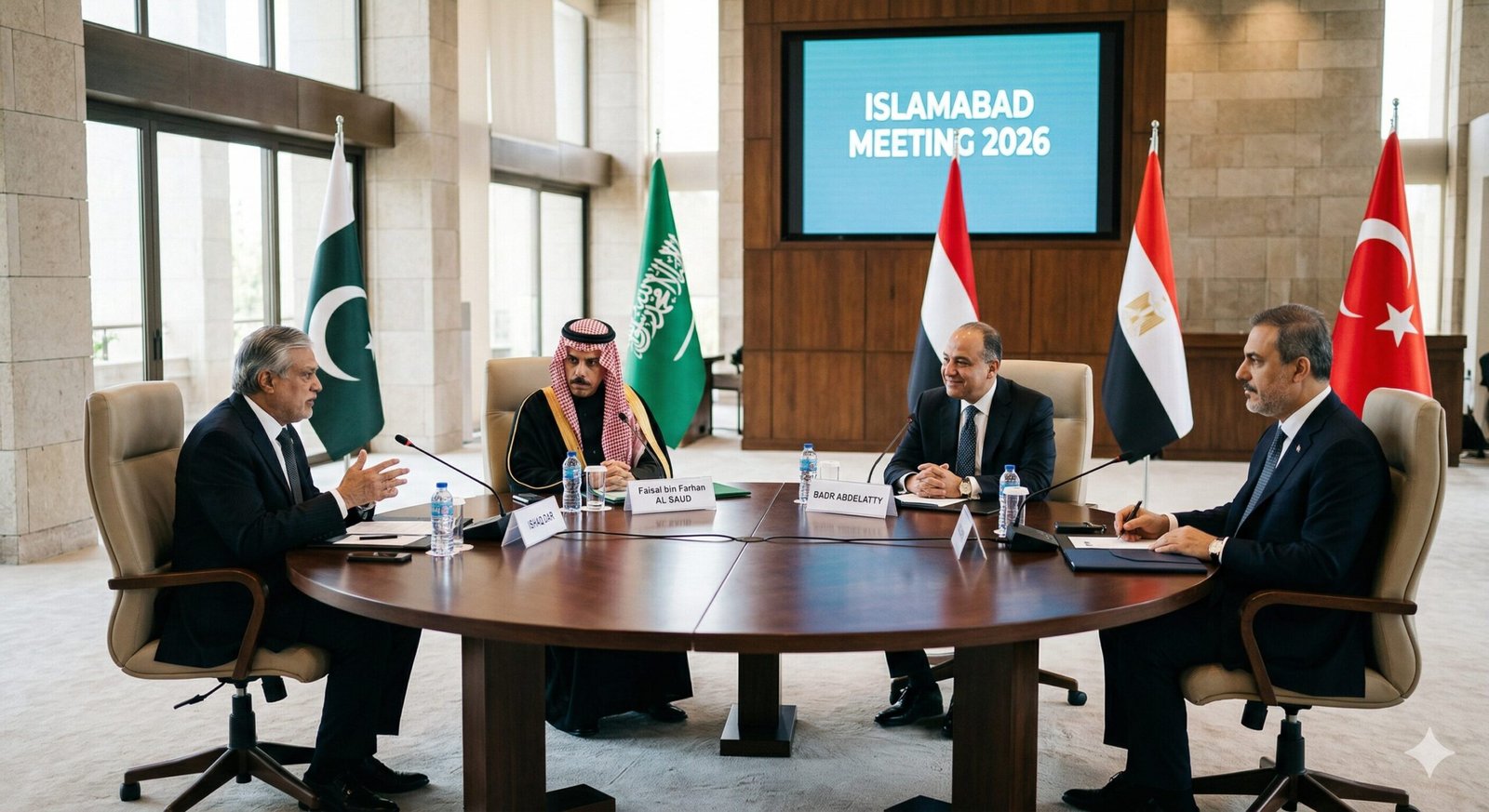
In a landmark display of Islamic diplomacy, Pakistan hosted an urgent quadrilateral summit on March 29, 2026. The meeting brought together the foreign ministers of Saudi Arabia, Turkey, and Egypt to address the escalating Middle East crisis in 2026.
As a result, the Islamabad meeting marks a major turning point in Pakistan’s growing role as a mediator in the US-Iran-Israel conflict. This development could reshape the geopolitical landscape of the region.
Foreign Minister Ishaq Dar, who also serves as Deputy Prime Minister, confirmed that both the United States and Iran trust Pakistan to facilitate dialogue. He stated, “Pakistan will be honoured to host and facilitate meaningful talks between the two sides in the coming days for a comprehensive and lasting settlement.”
The Middle East Crisis 2026 and Pakistan’s Role
The current Middle East conflict began on February 28, 2026. Since then, it has rapidly escalated into a multi-front war involving the United States, Israel, and Iran.
As a result, global oil prices have surged sharply. In addition, key shipping routes through the Strait of Hormuz have been disrupted. Consequently, fears of a wider regional conflict continue to grow.
Why Pakistan? The Strategic Logic Behind Its Mediator Role
Pakistan’s role as a mediator is based on several unique strategic advantages.
Firstly, it is the only nuclear-armed Muslim-majority country without US military bases on its soil. Secondly, it shares a 909-kilometre border with Iran and has deep cultural and religious ties.
Moreover, Pakistan maintains strong relations with Saudi Arabia and the United States. At the same time, it has longstanding diplomatic ties with Iran.
Because of these overlapping relationships, Pakistan enjoys credibility with all sides. Therefore, it is well-positioned to act as a neutral and trusted mediator.
The Islamabad Summit: A Historic Quadrilateral Meeting
The Pakistan-Saudi Arabia-Turkey-Egypt meeting on March 29 was historic. It marked the first quadrilateral format of its kind.
Turkish and Egyptian foreign ministers arrived in Islamabad a day earlier. Meanwhile, the Saudi foreign minister joined on Sunday. The talks were held under strict security and lasted several hours.
Key Outcomes of the Islamabad Meeting
1. Dialogue as the Only Solution
All four countries agreed that dialogue and diplomacy are the only viable solutions. They emphasised the need for an early and lasting end to the conflict.
2. China’s Support for Pakistan’s Initiative
In addition, China expressed full support for Pakistan’s role in facilitating peace talks. This endorsement adds significant global weight to Pakistan’s diplomatic efforts.
3. Pakistan as an Active Intermediary
Furthermore, Pakistan is actively relaying messages between the United States and Iran. This back-channel diplomacy is already showing signs of progress.
Impact of the Middle East Conflict on the Global Economy
The conflict has triggered major disruptions across global markets.
Firstly, oil prices have reached their highest level in more than three years. This is mainly due to instability in the Strait of Hormuz, through which a large portion of global oil supply passes.
Secondly, global trade has been affected. Shipping routes in the Red Sea are facing serious security threats.
As a result, supply chains, food security, and energy markets are under pressure worldwide.
Red Sea Crisis and Trade Disruptions
The Red Sea security situation has significantly disrupted global shipping. For example, major shipping companies have suspended operations due to rising security risks.
Moreover, this disruption has created serious economic challenges. These include higher transportation costs, delays in deliveries, and increased pressure on global trade systems.
Pakistan’s Economic Exposure to the Conflict
Pakistan is directly affected by the ongoing crisis.
For instance, rising oil prices are increasing import costs. In addition, disrupted shipping routes are affecting exports to international markets.
Moreover, remittances from Pakistani workers in Gulf countries could also face risks. Therefore, resolving the conflict is not only a diplomatic priority but also an economic necessity for Pakistan.
Pakistan’s Diplomatic Efforts: Timeline
- February 28, 2026: Conflict begins; Pakistan calls for dialogue
- March 3, 2026: Pakistan offers to facilitate US-Iran talks
- March 2026: Messages exchanged between the US and Iran through Pakistan
- March 28, 2026: High-level diplomatic contact between Pakistan and Iran
- March 29, 2026: Quadrilateral summit held in Islamabad
- March 29, 2026: Pakistan offers to host direct talks
Challenges Ahead: Can Pakistan Succeed?
However, several challenges remain.
For example, Iran has expressed concerns about US demands. At the same time, disagreements over nuclear policy continue.
Although progress has been made, a final agreement will require compromise from all parties. Therefore, sustained diplomatic engagement is essential.
International Support and Expectations
International support for Pakistan’s efforts is growing.
For instance, global powers have shown confidence in Pakistan’s diplomatic role. As a result, expectations for direct talks are increasing.
This support strengthens Pakistan’s position as a credible mediator on the global stage.
Frequently Asked Questions (FAQs)
Q1: What is Pakistan’s role in the Middle East crisis of 2026?
Pakistan is acting as a facilitator between the United States and Iran. It is helping both sides move toward dialogue and potential peace talks.
Q2: Who attended the Islamabad meeting?
The meeting included foreign ministers from Pakistan, Saudi Arabia, Turkey, and Egypt.
Q3: How is the conflict affecting oil prices?
The conflict has pushed oil prices to record highs due to disruptions in key supply routes.
Q4: Why is Pakistan important in this situation?
Pakistan has strong relations with all key players, making it a neutral and trusted mediator.
Q5: How does this conflict impact Pakistan?
It affects Pakistan through higher oil costs, trade disruptions, and economic uncertainty.
Conclusion: Pakistan at the Centre of Global Diplomacy
In conclusion, the Islamabad meeting has positioned Pakistan as a key diplomatic player in the Middle East crisis of 2026.
Through balanced relationships and active engagement, Pakistan has gained trust from multiple global powers. As a result, it is now playing a central role in efforts to reduce tensions.
While challenges remain, Pakistan has laid a strong foundation for future peace talks. Therefore, Islamabad is emerging as a critical hub for global diplomacy.
Need legal help?
Ask our AI assistant or connect with a verified Pakistani lawyer.
Get free legal helpStay ahead with legal insights.
Weekly digest: judgments worth reading, statute amendments, and one product update. No spam.