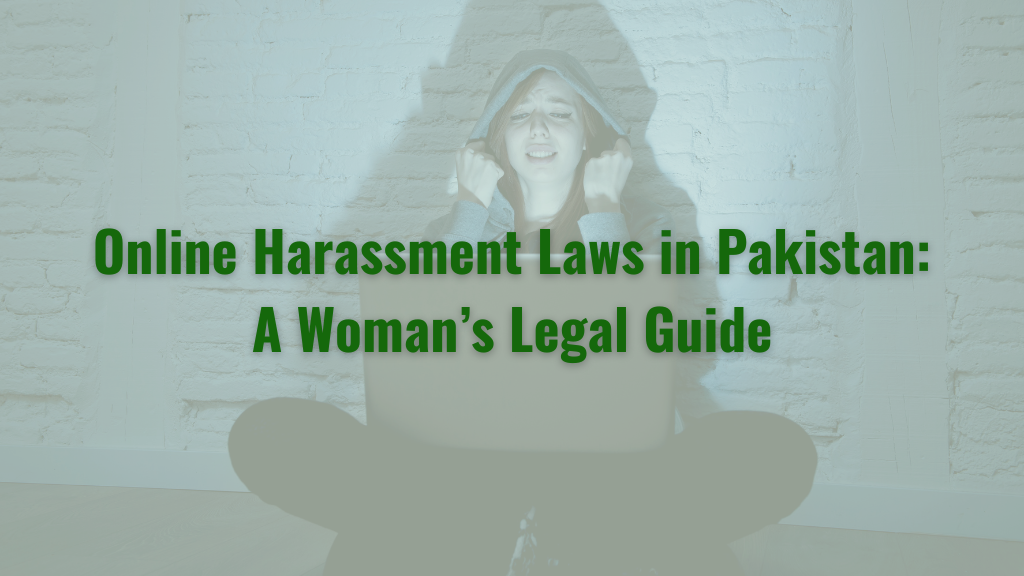
In today’s digital age, women are more connected than ever. While the internet provides countless opportunities, it also exposes users to the increasing risk of online harassment. From cyberbullying and blackmail to stalking and identity theft, online abuse can take many forms.
Therefore, if you are a woman facing harassment online in Pakistan, knowing your legal rights is essential. This guide will help you understand the laws that protect you and explain how to seek help legally and safely.
What is Online Harassment?
Online harassment refers to any digital behavior intended to cause fear, distress, or harm. It can appear in several forms, including:
- Sending threatening or abusive messages
- Sharing private images without consent
- Cyberstalking (constant monitoring or repeated contact online)
- Blackmail or threats to leak personal data or images
- Spreading false information or defamation
In Pakistan, such acts are considered criminal offenses under cybercrime laws.
Key Law Protecting Women: Prevention of Electronic Crimes Act, 2016 (PECA)
What is PECA?
The Prevention of Electronic Crimes Act, 2016 (PECA) is Pakistan’s primary law dealing with cybercrimes. It defines online offenses, prescribes punishments, and empowers victims to take legal action against digital abuse.
Types of Online Harassment Under PECA
1. Cyberstalking – Section 21
This includes monitoring someone’s online activities, sending repeated unwanted messages, tracking someone digitally, or using their images without consent to harass or threaten them.
Punishment: Up to 3–5 years imprisonment and/or fine.
2. Offences Against Dignity of a Natural Person – Section 20
This applies when someone shares false, harmful, or defamatory information online that damages a person’s reputation or privacy.
Punishment: Up to 3 years imprisonment and/or a fine of up to PKR 1 million.
3. Unauthorized Use of Identity Information – Section 24
Using someone’s personal data, pictures, CNIC, or creating fake profiles without consent falls under this section.
Punishment: Up to 3 years imprisonment and/or fine.
4. Cyberbullying – Section 24A
This section specifically addresses harassment through digital platforms, especially involving minors. It includes sending threatening messages, posting harmful content, or targeting someone repeatedly online. It also allows guardians to request the removal of such content.
Punishment: Imprisonment and/or fine (as per PECA provisions).
5. Electronic Crimes (Forgery & Fraud) – Sections 13 & 14
- Section 13: Electronic forgery (fake documents, fake digital content)
- Section 14: Electronic fraud (online scams, deception)
Punishment: Up to 7 years imprisonment, depending on the offense.
How to File a Complaint Against Online Harassment
Step 1: Gather Evidence
Save all proof, including:
- Screenshots of chats and messages
- Social media posts and URLs
- Emails and call records
- Any audio or video evidence
Step 2: Contact FIA Cyber Crime Wing
You can report through:
- Online: FIA Cyber Crime Portal
- Email: [email protected]
- In-person: Visit the nearest FIA Cyber Crime Reporting Center
Step 3: File Your Complaint
Submit a written application explaining the issue. Attach:
- CNIC copy
- All collected evidence
Step 4: Follow Up
Stay in contact with the investigation officer and provide additional information if required.
Role of Police and FIA
The FIA Cyber Crime Wing primarily handles online harassment cases under PECA. However, in urgent situations, local police can also assist. Both institutions are responsible for ensuring your safety and legal protection.
Support Systems Available for Women
Helplines and Resources
FIA Cyber Crime Helpline
These organizations provide legal guidance, complaint support, and even psychological counseling.
What to Do If You Feel Unsafe
Immediate Safety Steps
- Block the harasser on all platforms
- Change passwords of social media and email accounts
- Enable two-factor authentication
- Avoid sharing personal or sensitive information
Take Care of Your Mental Well-being
Online harassment can be emotionally exhausting. Talk to trusted friends or family members. Seeking help from a professional counselor is also strongly recommended.
Your Legal Rights as a Woman in Pakistan
- Right to Privacy: Your personal data and images are protected by law
- Right to File a Complaint: You can report to FIA or the police
- Right to Protection Orders: Courts can restrict the harasser
- Right to Justice: Offenders can face strict punishment under PECA
Common Myths About Online Harassment Laws
“Reporting is useless.”
False — FIA actively investigates complaints.
“Online harassment is not serious.”
Incorrect — it is a criminal offense under PECA.
“Only influential people get justice.”
Untrue — the law applies equally to all citizens.
Digital Safety Tips for Women
- Keep privacy settings updated
- Avoid sharing personal information publicly
- Accept requests only from known people
- Use strong and unique passwords
- Log out of shared devices
When Should You Hire a Lawyer?
You should consult a lawyer if:
- Harassment continues after reporting
- The case becomes complex
- You need court orders or compensation
A lawyer can help with legal proceedings, petitions, and protection orders.
Conclusion
Online harassment is a serious issue, but Pakistani law provides strong protection through the Prevention of Electronic Crimes Act, 2016 (PECA). Women facing digital abuse should not stay silent — legal help is available.
Taking action, preserving evidence, and knowing your rights can help you fight back effectively and safely.