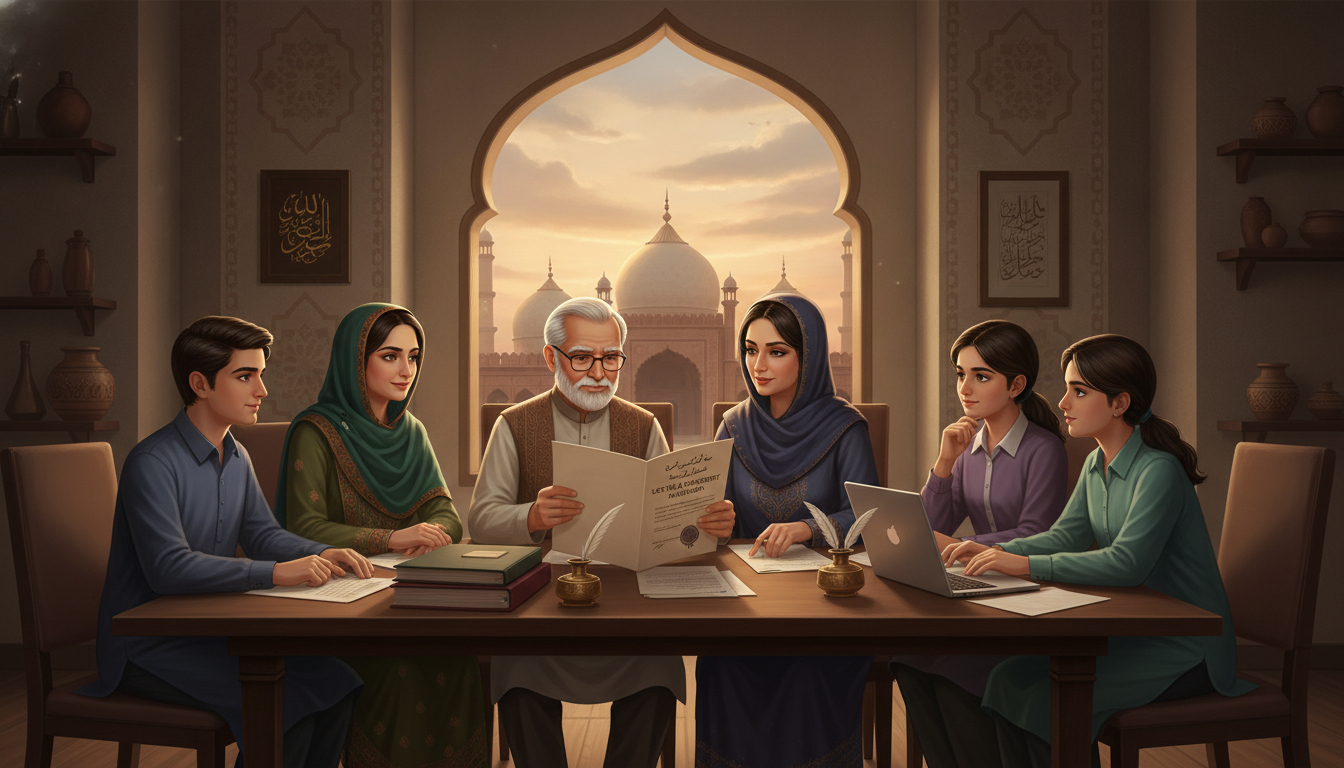
Who Legally Inherits What in Pakistan?
Property disputes are one of the most common family conflicts in Pakistan. Unfortunately, many individuals are denied their rightful inheritance because of misunderstandings, social pressure, or misinformation.
Questions such as:
Does a daughter inherit her father's property?
Can brothers legally exclude their sisters?
Does a verbal will override inheritance laws?
Who inherits property when there is no written will?
are frequently asked questions across Pakistan.
The answer depends on several factors, including the deceased person's religion, family structure, the nature of the property, and whether a legally valid will exists.
This guide explains Pakistan's inheritance laws in simple language so that individuals and families can better understand their legal rights.
Understanding Inheritance Laws in Pakistan
Inheritance refers to the legal transfer of property, assets, and financial interests after a person's death.
Inheritance may include:
Pakistan recognizes different legal frameworks for inheritance based primarily on religion.
These laws determine:
Who qualifies as a legal heir
The share each heir receives
Distribution procedures
Rights relating to wills and succession
Muslim Inheritance Law in Pakistan
Muslim inheritance matters are governed by Muslim Personal Law (Shariat), which provides predetermined shares for eligible heirs. The West Pakistan Muslim Personal Law (Shariat) Application Act, 1962, ensures that Muslim Personal Law applies to inheritance matters in Pakistan.
Unlike cultural practices, inheritance shares are determined by law and cannot simply be altered through family preferences.
Common Legal Heirs Include
Example
If both sons and daughters inherit together:
This principle is frequently misunderstood as discrimination, whereas Islamic inheritance assigns financial responsibilities differently among heirs. Inheritance calculations may also vary depending upon surviving family members.
Does a Daughter Have Inheritance Rights?
Yes.
A daughter has legally protected inheritance rights in Pakistan.
Some common misconceptions include:
Married daughters cannot inherit.
Sisters voluntarily lose inheritance after marriage.
Brothers automatically inherit everything.
Women cannot inherit agricultural land.
All of these assumptions are legally incorrect.
Muslim women possess inheritance rights over both movable and immovable property. Courts in Pakistan have repeatedly upheld these rights, and legislation provides criminal penalties in certain circumstances for unlawfully depriving women of their inheritance.
Rights of a Wife and Husband
Inheritance rights also extend to spouses.
A Wife May Inherit
A Husband May Inherit
Actual calculations can differ depending upon surviving heirs and specific circumstances.
Can Someone Write a Will for Their Entire Property?
No.
One of the biggest myths surrounding inheritance in Pakistan is that a person may distribute their entire property through a will.
Under Muslim law, a person generally cannot dispose of the entire estate through a will in a manner that deprives legal heirs of their prescribed shares.
Legal limitations exist regarding testamentary disposition, and legal heirs' rights remain protected under inheritance laws.
Can a Verbal Will Override Legal Inheritance Rights?
No.
Families sometimes rely upon statements such as:
"My father verbally gifted everything to one son."
"Everyone agreed the property belongs to the eldest brother."
"Our family decided daughters will not inherit."
These statements do not automatically override applicable inheritance laws.
Where disputes arise, courts consider:
Applicable inheritance laws
Documentary evidence
Ownership records
Valid gifts and transfers made during lifetime
Legal requirements relating to wills and succession
Verbal family understandings alone do not necessarily extinguish the legal rights of heirs.
Non-Muslim Inheritance Laws in Pakistan
Non-Muslim inheritance matters are generally governed by the Succession Act, 1925, although personal laws applicable to particular religious communities may also become relevant in specific circumstances.
The Succession Act addresses matters including:
Unlike Muslim inheritance law, succession under the Act follows different legal principles regarding property distribution and wills.
Common Inheritance Myths in Pakistan
Myth 1: Married Daughters Cannot Inherit
False.
Marriage does not eliminate inheritance rights.
Myth 2: Agricultural Land Only Belongs to Sons
False.
Women possess legally protected inheritance rights over property, including agricultural land.
Myth 3: Brothers Can Decide Who Inherits
False.
Inheritance shares are determined according to applicable law.
Myth 4: Family Agreements Always Override Legal Rights
False.
Unlawful agreements cannot automatically deprive legal heirs of their rights.
Myth 5: Only Written Property Documents Matter
False.
Bank accounts, investments, business assets, and other interests may also form part of an estate.
What Should You Do if You Are Denied Your Legal Share?
If you are denied inheritance, consider taking the following steps.
Step 1: Gather Relevant Documents
Collect:
Step 2: Identify All Legal Heirs
Determine:
Surviving spouses
Children
Parents
Other eligible heirs
Step 3: Obtain Legal Documentation
Depending upon the circumstances, this may include:
Step 4: Seek Legal Assistance
Inheritance disputes often involve:
Property transfers
Revenue matters
Civil litigation
Family settlements
Professional legal advice can help determine the most appropriate remedy.
Step 5: Pursue Legal Remedies
Courts in Pakistan may provide remedies relating to:
Timely legal action can significantly improve the likelihood of protecting your rights.
Final Thoughts
Inheritance is not merely a family matter—it is a legal right. Unfortunately, thousands of inheritance disputes arise every year because individuals rely on assumptions instead of understanding the law.
Whether you are a son, daughter, spouse, or parent, knowing your legal rights can prevent unnecessary conflict and protect what the law provides. No legal heir should be deprived of their rightful share because of social pressure, misinformation, or unlawful family arrangements.
When inheritance questions arise, seeking timely legal guidance can make all the difference.
Learn More